⭐ 4.9/5 · 127 Google Reviews · Full Re-Roof Specialists
Roof Replacement in Spennymoor
A complete re-roof done honestly — proper survey, itemised quote, correct materials for the property type, and a written 10-year guarantee. Covering Spennymoor, Ferryhill, Bishop Auckland, Tudhoe and surrounding villages.
Tell us the job in 30 seconds. No pushy sales, no call-out fee. See how we work.
20+
Years Local
127
5★ Reviews
24/7
Emergency
10yr
Guarantee
Roof Replacement in Spennymoor typically costs £900–£2,500 for garage or outbuilding re-roof, rising to £5,500–£9,000 for three-bed semi, full re-roof. Free survey and a written itemised quote first. Call 01325 787169.
✓ NFRC Registered
✓ Fully Insured
✓ 10 Year Guarantee
✓ Free Quotes
✓ No Call-Out Fee
✓ 12 miles Away
Roof Replacement in Spennymoor
Roof Replacement — Spennymoor
A complete re-roof done honestly — proper survey, itemised quote, correct materials for the property type, and a written 10-year guarantee. Full re-roofs from £5,500. Free itemised quotes including scaffold.
Full Strip & Re-Roof
Complete removal of existing tiles, felt and battens. New breathable underlay, treated battens and tiles to current standards.
A full re-roof is the right answer when the fixings have gone across the whole covering, not when a few tiles have slipped. The honest test is what a surveyor finds when they lift a tile — corroded nail stubs across every plane means the roof is finished, however sound the tiles look. Spennymoor is largely colliery-era terraces and later estate housing, and that narrows the likely causes considerably.
Tiles or slates lifting by hand across more than one plane
Repeated slipped tiles in different places each winter
Sagging along the ridge line or between rafters
Underlay visibly torn or absent when viewed from the loft
Repair costs over recent years approaching a third of replacement cost
When it is not the answer: If the covering is sound and only the underlay has failed, a strip-and-relay reusing your existing tiles or slates costs substantially less than a full replacement in new material. Read the full guide.
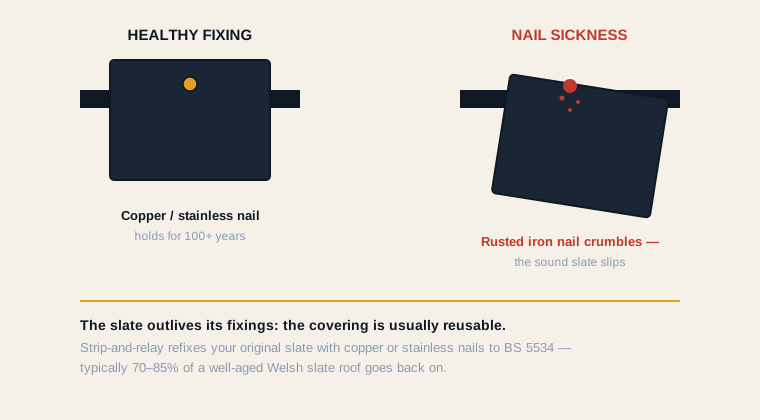
Nail sickness: the slate outlives its fixings, which is why sound covering can usually be relaid.
Roof Replacement in Spennymoor
Why Does Local Roofing Knowledge Matter?
Spennymoor's housing is predominantly Victorian mining terraces in the town centre with Welsh slate; post-war council and private semis on the fringes with concrete interlocking tile. Knowing the specific roof types and their failure patterns is the difference between a roofer who diagnoses correctly first time and one who keeps coming back.
Climate & Roofing in Spennymoor
Wear Valley location creates higher humidity and faster moss growth than surrounding high ground — north-facing slopes particularly affected. This directly affects how quickly specific problems develop and which repair approaches last longest.
Common Roof Replacement Issues in Spennymoor
Accelerated moss and lichen growth on north-facing slopes; mortar failure on Victorian chimney stacks; nail sickness on 1960s–70s post-war stock. We cover Spennymoor regularly and carry the most common materials on the vehicle.
Darlington Roofing ExpertsCovering: Spennymoor & surrounding area
Call: 01325 787169
Response: 12 miles from Darlington base — typically 20 minutes
Hours: Mon–Fri 7:30am–6pm · Sat 8am–2pm Emergency: 24/7
The process
From First Call to Sign-Off in Spennymoor
1. Full condition survey
Every plane assessed, fixings tested, loft inspected and timber condition established before any price is given. For Spennymoor properties this is where the era of the building starts to matter.
2. Written specification and quote
Materials named by manufacturer, batten and membrane specification stated, insulation and ventilation upgrades priced separately so you can see them.
3. Building control notification
Replacing more than a quarter of a roof covering is notifiable. We handle the notification and the sign-off.
4. Scaffold and protection
Full scaffold with edge protection and debris netting, planting and paving sheeted, skip sited by agreement.
5. Strip and inspect
The covering comes off, timbers are inspected in daylight for the first time in decades, and anything found is reported and priced before it is done.
6. Re-roof and detail
Membrane, treated battens gauged to the covering, tiles or slates laid and fixed to BS 5534, then leadwork, verges and ridge finished.
7. Cleanup, sign-off and handover
Site cleared, gutters flushed, completion photographs, building control certificate and written guarantee handed over. Everything is cleared before we leave a Spennymoor property — including the pavement where scaffold has stood.
Because Spennymoor is colliery-era terraces and later estate housing, we allow extra survey time here — the covering and the structure often tell different stories.
Timescales
Job Durations at a Glance
Job
Typical duration
Garage or outbuilding roof
1–2 days
Terraced house, strip and relay
4–6 days
Three-bed semi, full re-roof
5–8 days
Detached house, full re-roof
8–12 days
Scaffold up and struck (either side)
1 day each
Re-roofs are weather-dependent by nature. We never strip more than can be made watertight the same day, and the programme carries contingency for lost days.
On Spennymoor properties allow a little more where the covering is original: colliery-era terraces and later estate housing rarely comes apart to schedule.
Access
Scaffold, Skips & Street Access
A full re-roof always needs scaffold with edge protection — there is no safe alternative. Scaffold is specified for: every full replacement, without exception, plus a debris chute and netting on terraced streets - always itemised in your written quote, never a hidden extra, and we arrange it.
Spennymoor’s terraced streets have back lanes that take a skip but rarely a scaffold wagon; most loads are hand-carried in from the front. Pavement scaffold and skip permits go through Durham County Council; allow a few working days on streets like High Street, Cheapside where space is tight.
Pricing
What Roof Replacement Costs in Spennymoor
Job
Typical range
Notes
Garage or outbuilding re-roof
£900–£2,500
Depends on size and covering
Terraced house, strip and relay
£4,500–£7,500
Reusing sound covering where possible
Three-bed semi, full re-roof
£5,500–£9,000
New tiles, membrane, battens, scaffold
Detached house, full re-roof
£8,000–£15,000
Scales with area and detailing
Insulation and ventilation upgrade
£350–£900
Notifiable work, included in sign-off
Scaffold, two-storey semi
£600–£1,200
Itemised separately, never hidden
What moves the price
Roof area and complexity — hips, valleys and dormers each add labour disproportionate to area
Covering choice: concrete interlocking is cheapest, clay and natural slate cost considerably more
Timber condition found once the covering is off — reported and priced before it is done
Access, particularly on terraces where scaffold is hand-carried through the property
Insulation and ventilation upgrades required to meet current building regulations
Worked example: A three-bed semi on the Whinfield estate — 88m² stripped, breathable membrane, new treated battens, concrete interlocking tiles, dry ridge and verge, eaves ventilation, scaffold and skip — came to £7,150 including building control sign-off.
Staged payments on re-roofs, with nothing payable before materials are on site. A typical structure is a payment when scaffold is up and the roof is stripped, and the balance on completion and sign-off. Never pay a large cash deposit up front for roofing work.
These are Spennymoor prices. Access is the main local variable: Spennymoor’s terraced streets have back lanes that take a skip but rarely a scaffold wagon; most loads are hand-carried in from the front.
Guarantee
What the 10-Year Guarantee Actually Covers
Workmanship guaranteed for 10 years in writing and transferable if you sell. Tiles, slates and membrane carry separate manufacturer warranties, typically 15–30 years depending on product.
Covered: workmanship for 10 years, in writing, transferable if you sell.
On top: manufacturer warranties on materials (terms vary by product).
Not covered: storm or impact damage - that is an insurance matter, and we will document it for your claim.
If a fault appears in covered work, we come back and put it right. No quibbling, no re-charge.
Because colliery-era terraces and later estate housing varies so much across Spennymoor, the specification we used is written into your guarantee rather than left implied.
Good to know
Disruption, Mess & Weather
This is the disruptive one: scaffold for a fortnight, real noise during the strip, and a skip on site. We agree working hours in advance and protect everything below. You do not need to stay home for external work - we just need power and access agreed in advance. In Spennymoor we keep the working area sheeted throughout rather than just at the end.
Re-roofing runs year-round in the North East, but we plan winter jobs in smaller watertight sections and keep temporary covering on site throughout. Exposed plateau position with hard winter frosts and steady westerly wind loading.
Customer Reviews
What Spennymoor Customers Say
★★★★★
“Moss removal and biocide treatment on our terrace — the difference is remarkable. Roof looks properly maintained again.”
Anne D. · Durham Road, Spennymoor
★★★★★
“Flat roof on the rear extension had been leaking since we bought the house. GRP replacement sorted it completely.”
Brian H. · Tudhoe Grange, Spennymoor
★★★★★
“Three chimneys repointed across two visits. Honest about what needed doing and what could wait. Refreshing.”
Carol F. · High Street, Spennymoor
Covering DL16 and surrounding postcodes.
Free Quote — Spennymoor
Full re-roofs from £5,500. Free itemised quotes including scaffold. No call-out fee.
Realistic 2025 prices for Spennymoor properties. All quotes are free, written and itemised before work begins.
Job Type
Typical Cost
2-bed terrace, concrete tile
£4,500–£7,000
3-bed semi, concrete tile
£5,500–£8,500
3-bed semi, natural slate
£7,000–£11,000
4-bed detached, concrete tile
£8,500–£13,000
Bungalow re-roof
£4,000–£7,000
Scaffold (included in above)
£700–£1,500
All prices are installed costs. Call 01325 787169 for a free written quote.
Survey and Specification for Spennymoor Properties
Every replacement quote we provide in Spennymoor starts with a proper roof survey — measuring the area, assessing the existing structure, and confirming the correct materials. Spennymoor's housing stock is predominantly Victorian mining terraces in the town centre, post-war council and private semis on the residential fringes, with Wear Valley humidity affecting all property types. The correct tile or slate specification varies between these property types, and fitting the wrong material — particularly on period properties in Spennymoor — can affect both appearance and planning compliance.
What the Re-Roofing Process Involves in Spennymoor
A standard re-roof in Spennymoor involves: scaffold erected and secured, full strip of existing tiles, felt and battens, inspection of the timber structure for any decay or damage requiring repair before the new roof goes on, installation of new breathable underlay, treated timber battens, and tiles or slate to specification. Ridge and hips are fitted dry-fix as standard. All lead valley and flashing work is replaced using Code 4/5 lead. The site is left clear at the end of each day. Most 3-bed semis in Spennymoor are re-roofed in 3–5 working days.
Materials and Climate Considerations in Spennymoor
Spennymoor's climate is characterised by Wear valley location creates higher humidity and faster moss growth than surrounding high ground — north-facing slopes see accelerated deterioration compared to exposed but drier plateau positions. When specifying materials for re-roofing work in Spennymoor, we account for these conditions. Breathable modern underlay is specified as standard — it outperforms non-breathable felt in the damp climate and avoids the condensation issues associated with sealed roof voids. Dry-fix ridge and hip systems are recommended on exposed pitches where mortar bedding deteriorates faster than in sheltered urban locations.
Key indicators: nail sickness affecting more than a quarter of the roof; degraded felt underlay; repairs needed repeatedly in different areas; or recurring costs every year or two. If you're spending regularly on repairs, replacement is usually cheaper over a 10-year horizon.
Everything: scaffold, full strip, new breathable underlay, treated battens, tiles, ridge system, all lead flashing work at chimneys and valleys, and site clearance. We don't quote for the easy parts and add the rest later.
Yes. We work through winter across County Durham. We monitor forecasts carefully and schedule around prolonged frost or severe weather that could affect the work.
Yes. We're registered with the National Federation of Roofing Contractors, meeting recognised industry standards for quality and safety. All work comes with a written 10-year workmanship guarantee.
Yes. All quotes are free, no-obligation and provided in writing. We get on the roof to measure and inspect before quoting — no estimates from the street, no call-out charge for the survey visit.
We cover Darlington and approximately a 20-mile radius including Stockton-on-Tees, Middlesbrough, Newton Aycliffe, Bishop Auckland, Northallerton, Shildon, Spennymoor, Hurworth, Heighington, Ferryhill, Sedgefield and all surrounding villages.
Yes. We carry £5m public liability insurance on all work and are happy to provide evidence of cover before starting any job.